The Nintendo 64 (N64) is a fifth-generation home video game console developed and manufactured by Nintendo. Released in 1996, it was Nintendo's first system to feature true 3D graphics and utilised cartridges as its primary media format. The N64 is renowned for its innovative controller design, four built-in controller ports, and a library of influential games such as Super Mario 64, The Legend of Zelda: Ocarina of Time, and GoldenEye 007.
The Nintendo 64 is powered by a 64-bit MIPS RISC processor, the NEC VR4300, running at 93.75 MHz. The CPU is paired with the custom Reality Coprocessor, designed by Silicon Graphics, which handles graphics and audio processing. This architecture enabled advanced 3D rendering, texture mapping, and effects previously unseen on home consoles.
💾 Memory and Storage
The system includes 4 MB of unified RDRAM, expandable to 8 MB with the optional Expansion Pak. Games are distributed on proprietary ROM cartridges ranging from 4 MB to 64 MB in size. Save data is stored either on cartridge-based memory or on the removable Controller Pak, which fits into the controller's expansion slot.
🖥️ Display and Graphics
The N64 outputs video at resolutions from 256×224 up to 640×480 pixels, supporting up to 16.7 million colours (though most games use 15-bit colour). The Reality Coprocessor's graphics subsystem enables real-time 3D rendering, Z-buffering, anti-aliasing, and texture filtering, setting new standards for console graphics at the time.
🔊 Sound Capabilities
Audio is processed by the Reality Coprocessor, supporting 16-bit stereo output with up to 100 simultaneous channels. Games often feature high-quality sampled music and sound effects, though storage limitations of cartridges sometimes required compression.
🎮 Input/Output and Expansion
The console features four controller ports for multiplayer gaming. Each controller includes an expansion slot for accessories such as the Rumble Pak (for force feedback), Controller Pak (memory card), and Transfer Pak. The system offers composite, S-Video, and RF video outputs, and supports a range of officially licensed and third-party peripherals.
🧰 General Maintenance
Routine maintenance involves keeping cartridge connectors and controller ports clean, ensuring adequate ventilation, and checking for dust buildup. Expansion Pak and Jumper Pak should be properly seated to avoid boot errors.
🧾 PCB Schematics & Service Guide
Official service information is limited, but community resources provide detailed PCB scans and repair guides. The motherboard is identified as NUS-CPU-xx, with several revisions over the console's lifespan.
The N64 rarely suffers from capacitor failure, but if required, use low-ESR electrolytic capacitors matching original values. Refer to motherboard scans for locations.
Retrobrite
Yellowed plastic can be restored using retrobrite techniques; avoid prolonged UV exposure to prevent further discolouration.
Troubleshooting
No power: Check power supply and internal fuse.
No video: Inspect AV cable and port.
Expansion Pak errors: Reseat or replace Expansion Pak.
Cartridge not recognised: Clean contacts and inspect for bent pins.


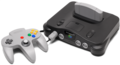 Nintendo 64 console and controller
 Expansion Pak
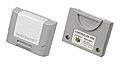 Controller Pak
 Rumble Pak


