
Macintosh 128K
The Macintosh 128K was Apple's first mass-market personal computer to feature a graphical user interface and mouse, released on January 24, 1984.[1][2] Designed to be an affordable and user-friendly computer, the Macintosh 128K was revolutionary in its time but was severely limited by its 128 KB of RAM, which was soldered to the logic board and could not be expanded.[3] This memory constraint became the system's defining limitation, forcing users into constant "disk swapping" when running applications and preventing the use of more demanding software.[4]
 | |
| Macintosh 128K | |
| Specifications | |
|---|---|
| Manufacturer | Apple Computer, Inc. |
| Type | Personal Computer |
| Released | January 24, 1984 |
| Discontinued | October 1, 1985 |
| Intro price | US$2,495 |
| CPU | Motorola 68000 @ 7.83 MHz |
| Memory | 128 KB RAM (not expandable) |
| Storage | 400 KB 3.5" floppy drive |
| Display | 9" monochrome CRT (512×342 pixels) |
| Sound | Monaural 8-bit, 22 kHz (4-voice) |
| Dimensions | 13.6" H × 9.6" W × 10.9" D |
| Weight | 16.5 lbs (7.5 kg) |
| OS / Firmware | System 1.0 – System 3.2 |
| Predecessor | None |
| Successor | Macintosh 512K |
| Codename | Annie, Mac, Twiggy Mac |
| Model no. | M0001 |
The system used a Motorola 68000 processor running at 7.83 MHz and introduced 3.5-inch floppy drives to the personal computer market.[5][6] The Macintosh 128K originally shipped with System 1.0, running the bundled MacPaint and MacWrite applications, and could support up to System 3.2.[7] Due to severe memory constraints, applications like MacDraw, Microsoft Excel, and PageMaker required the later Macintosh 512K or Macintosh Plus models. The 128K's limited memory meant that even switching between MacPaint and MacWrite required ejecting and inserting floppy disks multiple times—earning it the nickname "the $2,500 disk swapper" among early users.
General Maintenance
editFor detailed general maintenance practices including cleaning, PRAM battery handling (not applicable to 128K), connector corrosion prevention, and voltage adjustments, please see the dedicated Macintosh 128K/512K General Maintenance page.
PCB Schematics & Service Manual
editThe Macintosh 128K features two primary PCBs: the Logic Board and Analog Board. Below are the detailed schematics and the official Apple service manual. Due to the similarities with the Macintosh 512K, the logic board and analog board are nearly identical, with the 512K using additional RAM chips. The Macintosh Plus also shares the same analog board design (with the addition of a PRAM battery socket) as the 128K and 512K.
Apple Service Manual
edit
The Apple Service Manuals can be found on the Apple Service Source page.
Logic Board & Analog Board Schematics
edit| Logic Board | Analog Board |
|---|---|
  |
  |
Capacitor Replacement Guide
editDetailed capacitor replacement guidelines for both analog and logic boards can be found on the Macintosh 128K/512K Capacitor Replacement Guide page.
Retrobrite
editInstructions on addressing case yellowing through Retrobrite treatment can be found on the Retrobrite page.
Troubleshooting
editA comprehensive troubleshooting guide addressing no power, chime but no video, intermittent operation, Sad Mac errors, and floppy drive problems is available on the Macintosh 128K/512K Troubleshooting page.
Technical Details
editSystem Architecture at a Glance
edit| Sub-system | Specification (Macintosh 128K, Jan 1984) |
|---|---|
| CPU | Motorola 68000 @ 7.8336 MHz (15.667 MHz ÷ 2)
Design Philosophy Behind Motorola's MC68000– Thomas W. Starnes, BYTE Magazine, April 1983—link(accessed 2025-01-25)
|
| Bus width | 16-bit data • 24-bit address (16 MB logical space) |
| ROM | 64 KB "Boot/Toolbox" — 4 × TMS2532 16 KB mask ROMs
Macintosh 128K: Technical Specifications, Apple Support—link(accessed 2025-01-25)
|
| RAM | 128 KB DRAM (64 × MT4264-15, 150 ns) — non-expandable
Apple Macintosh Microcomputer, National Museum of American History—link(accessed 2025-01-25)
|
| Video | 512 × 342 mono — 22.1 KB frame buffer shared with system RAM Display DMA @ 15.667 MHz steals ~60% of CPU cycles during active scan |
| Sound | 8-bit DAC via VIA Port A • 22.254 kHz PWM → RC filter → speaker |
| Storage | Sony OA-D34V 400 KB GCR 3.5″ drive • IWM controller Variable speed: 394 RPM (outer) → 590 RPM (inner tracks) |
| Ports | DE-9 mouse • DE-9 keyboard • DB-19 ext. floppy • RS-422 serial × 2 • 3.5mm audio |
| Expansion | None — no slots, non-upgradeable RAM |
Memory Map (Physical)
edit| Range | Size | Purpose |
|---|---|---|
| $000000 – $01FFFF | 128 KB | DRAM (actual system memory) |
| $020000 – $03FFFF | 128 KB | DRAM mirrors (unused on 128K) |
| $400000 – $40FFFF | 64 KB | ROM (Boot/Toolbox) |
| $410000 – $41FFFF | 64 KB | ROM mirrors |
| $600000 – $6007FF | 2 KB | VIA 1 (system timers, sound) |
| $800000 – $8007FF | 2 KB | VIA 2 (keyboard, mouse, floppy) |
| $A00000 – $A007FF | 2 KB | SCC (serial communications) |
| $C00000 – $C007FF | 2 KB | IWM (floppy disk controller) |
| $E00000 – $EFFFFF | 1 MB | Slot space (unused on 128K) |
- Frame-buffer:* 22,016-byte display buffer at $12700 – $1FFFF (top of RAM); DMA fetches pixels during active scan, reducing CPU performance by ~40%.
ROM Layout (64 KB)
edit| Offset | Size | Module |
|---|---|---|
| $400000 | 4 KB | 68000 exception vectors + Boot code |
| $401000 | 16 KB | QuickDraw 1.0 (monochrome bitmap routines) |
| $405000 | 24 KB | Macintosh Toolbox (Window/Menu/Dialog Managers) |
| $40B000 | 8 KB | SANE (Standard Apple Numeric Environment) |
| $40D000 | 6 KB | Sony IWM floppy driver |
| $40E800 | 6 KB | System utilities & resource manager |
Video Timing
edit| Parameter | Value |
|---|---|
| Pixel clock | 15.667 MHz ÷ 2 = 7.833 MHz |
| Horizontal total | 704 pixels (512 active) |
| Vertical total | 370 lines (342 active) |
| Refresh rate | 60.15 Hz |
| Memory bandwidth | ~22 MB/s (shared with CPU) |
Floppy Disk Format (400 KB Sony GCR)
edit- 80 tracks • single-sided • variable-speed GCR encoding
- 12 sectors/track (outer) decreasing to 8 sectors/track (inner)
- Sector size: 512 bytes • Total capacity: 409,600 bytes
- IWM controller with software-controlled stepper motor timing
Key I/O ICs
edit- 6522 VIA × 2 (MOS Technology) — system timers, sound PWM, I/O handshake[8]
- 8530 SCC (Zilog) — dual RS-422 serial ports (230.4 kbps max)
- IWM (Apple custom) — Integrated Wozniak Machine floppy controller
- MC6883 PAL (Motorola) — address decode, 60 Hz VBL interrupt generation
Sound System
edit68000 writes 8-bit samples to VIA Port A at 22.254 kHz. VIA Timer 1 toggles Port B to create PWM signal, which passes through RC filter (R=10kΩ, C=0.1µF) to internal 8-ohm speaker or rear 3.5mm audio jack.
Memory Limitations & Performance Impact
editThe 128K's memory constraint created several operational challenges:
- Application switching required complete disk swaps due to insufficient RAM
- MultiFinder (cooperative multitasking) was impossible until 512K model
- Virtual memory concepts were unused due to single-floppy, no-HDD configuration
- System overhead consumed ~20KB, leaving only ~100KB for applications and documents
Hardware/Easter Facts
edit- First consumer computer to ship with 3.5" Sony floppy drives (later industry standard)
Insanely Great: The Life and Times of Macintosh, the Computer that Changed Everything, Penguin Books
- ISBN 0140291773}
- Hidden startup chime: Hold ⌘ + Option + Shift + Delete during boot for deep bass tone
Revolution in the Valley: The Insanely Great Story of How the Mac Was Made, O'Reilly Media
- ISBN 0596007191}
- Logic board manufactured by Apple in Fremont, California facility
1984 Timeline of Computer History, Computer History Museum—link(accessed 2025-01-25)
- Case design influenced by Braun radio aesthetics via Hartmut Esslinger
- "Twiggy Mac" prototype used dual 5.25" drives before Sony partnership
Original Apple Macintosh 128K Brochure 1984, Apple Computer—link(accessed 2025-01-25)
- Custom Motorola 68000 processors marked "SC87839L" used in development prototypes
Design Philosophy Behind Motorola's MC68000– Thomas W. Starnes, BYTE Magazine, April 1983—link(accessed 2025-01-25)
Gallery
edit-
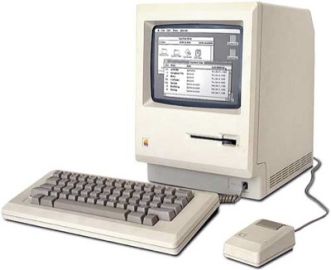 Macintosh 128K system
 -
 Logic board (64 × 64Kbit DRAM chips visible)
 -
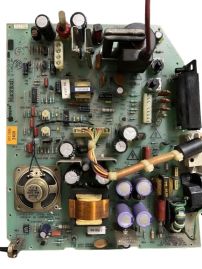 Analog board (shared with 512K/Plus)
 -
 System 2 Desktop

Related Pages
editReferences
edit- ↑ 1984 Timeline of Computer History, Computer History Museum—link(accessed 2025-01-25)
- ↑ Apple Macintosh Microcomputer, National Museum of American History—link(accessed 2025-01-25)
- ↑ Macintosh 128K: Technical Specifications, Apple Support—link(accessed 2025-01-25)
- ↑
Revolution in the Valley: The Insanely Great Story of How the Mac Was Made, O'Reilly Media
- ISBN 0596007191}
- ↑ Design Philosophy Behind Motorola's MC68000– Thomas W. Starnes, BYTE Magazine, April 1983—link(accessed 2025-01-25)
- ↑
Insanely Great: The Life and Times of Macintosh, the Computer that Changed Everything, Penguin Books
- ISBN 0140291773}
- ↑ 1984 Macintosh Manual, Apple Computer, Inc.—link(accessed 2025-01-25)
- ↑ Design Philosophy Behind Motorola's MC68000 (Part 2)– Thomas W. Starnes, BYTE Magazine, May 1983—link(accessed 2025-01-25)