

Macintosh 128K
 | |
| Macintosh 128K with keyboard and mouse | |
| Specifications | |
|---|---|
| Manufacturer | Apple Computer, Inc. |
| Type | Personal computer |
| Released | 24 January 1984 |
| Discontinued | 1 October 1985 |
| Intro price | US$2,495 |
| CPU | Motorola 68000, 7.83 MHz |
| Memory | 128 KB RAM (not expandable by the user); 64 KB ROM |
| Storage | Internal 400 KB single-sided 3.5 in floppy drive |
| Display | 9 in monochrome CRT, 512 × 342 |
| Sound | Four-voice, 8-bit D/A, 22 kHz sampling |
| Ports / interface | External floppy (DB-19), mouse (DE-9), keyboard (RJ-11), two RS-232/RS-422 serial (DE-9) |
| Power | 105-125 V AC, 50-60 Hz, 60 W maximum |
| Dimensions | 13.6 × 9.6 × 10.9 in (34.5 × 24.4 × 27.6 cm) |
| Weight | 16 lb 8 oz (7.5 kg) |
| OS / Firmware | — |
| Successor | Macintosh 512K |
| Model no. | M0001 |
The Macintosh 128K is the original Apple Macintosh, introduced on 24 January 1984 at US$2,495 and discontinued on 1 October 1985.[1][2] It has a Motorola 68000 at 7.83 MHz, 128 KB of RAM and 64 KB of ROM, a built-in 9-inch 512 × 342 monochrome screen and a 400 KB single-sided 3.5-inch floppy drive. The RAM is soldered to the logic board; Apple offered no memory expansion, though dealers and third parties upgraded machines to 512 KB.[1][3] The Macintosh 512K, introduced on 10 September 1984, is the same design with 512 KB of RAM, and Apple covers both machines in one service manual.[3][4]
Specifications
[edit | edit source]| Item | Specification |
|---|---|
| CPU | Motorola 68000, 7.83 MHz, 32-bit internal data bus |
| RAM | 128K (128K model) or 512K (512K model) |
| ROM | 64K |
| PRAM | CMOS custom chip, 256 bytes, backed by a user-replaceable 4.5 V battery |
| Floppy drive | Internal single-sided drive for 400K 3.5 in disks |
| Ports | External floppy (DB-19); mouse (DE-9); keyboard (RJ-11, synchronous serial); two RS-232/RS-422 serial (DE-9) |
| Keyboard and mouse | 58-key keyboard; mechanical mouse with optical shaft encoding at 3.54 pulses per mm (90 per inch) |
| Sound | Four voices, 8-bit D/A conversion, 22 kHz sampling |
| Video | 9 in diagonal, 512 × 342 bit-mapped |
| Electrical | 105-125 V AC, 50-60 Hz, 60 W maximum |
| Size and weight | 13.6 in (34.5 cm) high, 9.6 in (24.4 cm) wide, 10.9 in (27.6 cm) deep; 16 lb 8 oz (7.5 kg) |
Apple's support specification gives the PRAM battery as a 4.5 V alkaline cell, type 523, and the current draw as 0.5 A.[1] Because the cell is alkaline, not lithium, its leakage is treated differently from that of the lithium cells in later Macs; see Battery Explosion, Capacitor or Corrosion Damage.
Hardware
[edit | edit source]The logic board carries the 68000, RAM and ROM and five I/O functions: the video circuitry, the sound generator, a Synertek SY6522 VIA (keyboard, mouse, real-time clock, and parts of the sound and disk interfaces), a Zilog Z8530 SCC for the two serial ports, and Apple's IWM ("Integrated Woz Machine") floppy controller. A further custom chip, the Analog Signal Generator, reads a buffer in RAM to generate the voltages that set the floppy drive's motor speed. The keyboard contains its own Intel 8021 microcontroller.[5]
Inside Macintosh gives the processor clock as 7.8336 MHz and the pixel clock as 15.6672 MHz. The screen is 342 lines of 512 pixels refreshed at 60.15 Hz from 21,888 bytes of RAM, and video and sound share RAM access with the processor, which averages about 6 MHz of RAM access as a result. The sound generator reads 370 words of a RAM buffer per frame; the low byte of each word drives the floppy motor speed. The rear sound jack drives a load of 600 Ω or more, not a speaker directly.[5]
Each serial port uses 26LS30 drivers and 26LS32 receivers, and its DE-9 connector carries +5 V and +12 V. Apple's limit is 100 mA at +12 V and 200 mA at +5 V drawn from all the external connectors combined.[5]
The analogue side is a single power/sweep board carrying the power supply, the CRT sweep circuits and the PRAM battery. Apple's one electrical adjustment for these machines is made on it: with voltage test cable 077-0135 on the external drive port, the regulator is set so that +12 V reads 11.90-12.75 V and +5 V reads 4.85-5.15 V. The voltages must be checked after the logic board or the power/sweep board is replaced.[6] The procedure belongs to this power/sweep board and to the Macintosh Plus; later compact Macs have no equivalent adjustment.
Known faults
[edit | edit source]Apple's symptom charts point to the power/sweep board and its adjustment for several common faults. A machine that beeps continuously and keeps trying to power up needs the voltage adjustment first. For smoke or a burning smell, and for a machine with no video, no sound and no drive activity once the cord, switch and fuse have been checked, Apple warns that fitting only a new power supply board can damage it, and replaces the power supply board, logic board and internal drive together.[7] Diagnosis, capacitor work and maintenance are covered on:
- Macintosh 128K/512K Troubleshooting
- Macintosh 128K/512K Capacitor Replacement Guide
- Macintosh 128K/512K General Maintenance
The power/sweep board carries lethal voltages on the CRT side even when unplugged. See CRT Discharge Procedure.
Upgrades
[edit | edit source]Apple's own upgrade path for the 512K was an 800K floppy drive kit with new ROMs, which Apple did not recommend for the 128K, followed by a logic board kit that turned the machine into a Macintosh Plus with 1 MB of RAM. Later 400K drives with a new stepper motor needed replacement ROMs at D5 and D8.[8]
Documentation
[edit | edit source]- Macintosh 128K/512K Service Source: Apple's service manual for the 128K and 512K (specifications, symptom charts, take-apart, upgrades, voltage, yoke and video adjustments, exploded view with part numbers).
- Inside Macintosh Volumes I-II-III 1985: Volume III, chapter 2 describes the 128K and 512K hardware from the programmer's side.[5]
- Apple Macintosh Service Guide Volume 1 1990: Apple's pocket service guide; Tab 1 covers the 128K, 512K, 512K enhanced and Plus.
- Chilton's Guide to Macintosh Repair and Maintenance: Gene B. Williams's 1986 repair book for the 128K and 512K (xii, 212 pages).
- Intro to Macintosh 1985: a 57-page handout from a 1985 Macintosh training course, with MacPaint, MacWrite and MacDraw exercises.
- Apple Technical Procedures: Macintosh and Macintosh Plus
Gallery
[edit | edit source]-
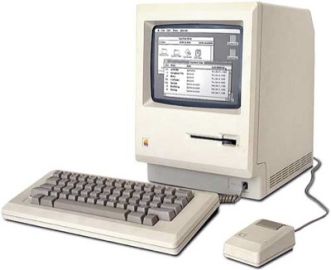 Macintosh 128K
 -
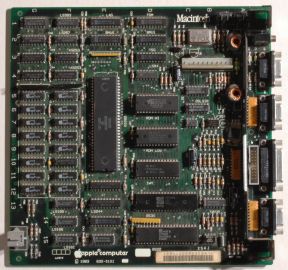 Macintosh 128K logic board
 -
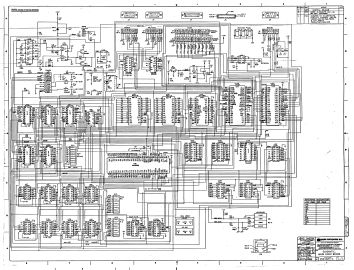 Macintosh 128K logic board schematic
 -
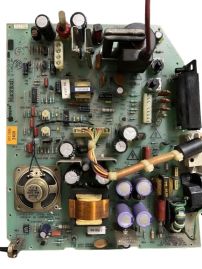 Macintosh Plus analog board, the Plus's equivalent of the power/sweep board
 -
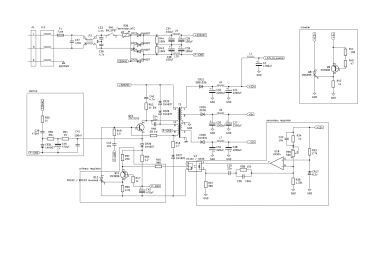 Macintosh Plus analog board schematic
 -
 System 2 desktop


Related pages
[edit | edit source]References
[edit | edit source]- ↑ 1.0 1.1 1.2 Apple, "Macintosh 128K: Technical Specifications", Apple Support. Retrieved 2026-09-30.
- ↑ EveryMac.com, "Macintosh Original (128k) Specs". Retrieved 2026-09-30.
- ↑ 3.0 3.1 3.2 Apple Computer, Inc., Macintosh (Service Source for the Macintosh 128K and 512K), Specifications, pp. 1-8 (PDF pp. 5-12). Hosted as File:Macintosh 128k.512k.pdf; see Macintosh 128K/512K Service Source.
- ↑ EveryMac.com, "Macintosh 512k Specs". Retrieved 2026-09-30.
- ↑ 5.0 5.1 5.2 5.3 Apple Computer, Inc., Inside Macintosh, Volume III (Addison-Wesley, 1985), chapter 2, "The Macintosh Hardware", pp. III-17 to III-45. Hosted in File:Inside Macintosh Volumes I-II-III 1985.pdf (PDF pp. 989-1017); see Inside Macintosh Volumes I-II-III 1985.
- ↑ Macintosh Service Source, Adjustments, Voltage, pp. 1-6 (PDF pp. 61-66).
- ↑ Macintosh Service Source, Troubleshooting, Symptom Charts, pp. 2-9 (PDF pp. 15-22).
- ↑ Macintosh Service Source, Upgrades, pp. 1-15 (PDF pp. 45-59).